Struggling to fit a bathroom into a tight cabin space? Finding the right size can delay your whole project. Let us look at the exact dimensions you need.
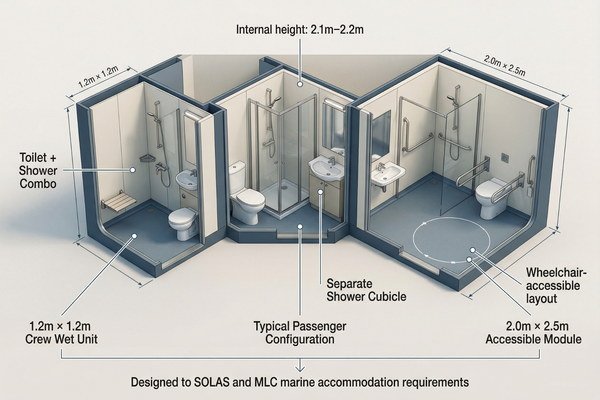
Standard ship wet units range from 1.2m x 1.2m crew enclosures to 2.0m x 2.5m passenger suites, featuring standard internal heights of 2.1m to 2.2m. Configurations include toilet-shower combos, separate shower cubicles, and wheelchair-accessible modules, fulfilling all SOLAS and MLC marine accommodation space requirements.
If you order the wrong size, the module will not fit through the ship doors. Let us dive into the core systems that make these units work.
What plumbing and drainage systems are integrated into marine wet units?
Leaks in a ship bathroom can ruin cabins below. You need plumbing that handles constant vibration. Here is what is inside a wet unit.
Marine wet units integrate three main plumbing systems: fresh water supply lines, grey water drainage for sinks and showers, and black water vacuum or gravity piping for toilets. These use flexible, vibration-resistant marine-grade stainless steel or specialized push-fit PEX pipes to prevent leaks at sea.
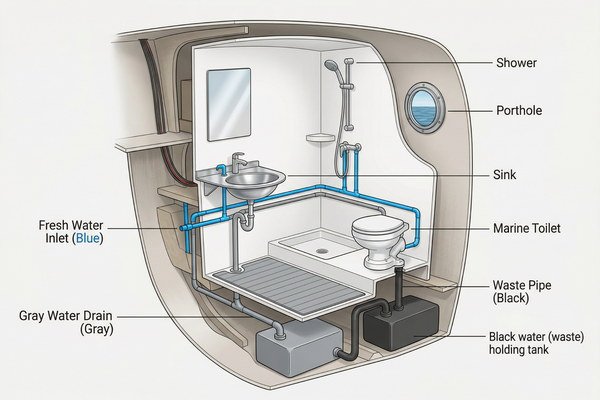
When I worked at the marine outfitting factory, I saw many plumbing mistakes. Leaks are the biggest nightmare for any ship interior decoration project. Therefore, you must understand the three main plumbing systems inside a marine wet unit. I always tell my clients to inspect these three systems before they accept any delivery.
Fresh Water Supply Lines for Marine Cabins
The first system is the fresh water supply. This system brings hot and cold water to the shower and the washbasin. Inside the wet unit, factories usually use PEX pipes1 or marine-grade stainless steel pipes. PEX pipes are very flexible. This flexibility is important because a ship vibrates constantly on the ocean. If you use rigid pipes like in a house, the ship's vibration will break the joints. According to DNV GL classification rules, these fresh water pipes must handle a standard working pressure of 3 to 5 bar. When you buy these units from suppliers in China or Vietnam, you must check that their pipes have the correct pressure certificates. The factory must pressure test these lines at 1.5 times the working pressure before they pack the unit.
Grey and Black Water Drainage Management
The second system is the grey water drainage. This pipe takes dirty water from the shower floor and the sink. The shower floor drain must have a water trap. This trap stops bad smells from coming back up from the main ship pipe. The third system is the black water drainage. This system is only for the toilet waste. Most modern ships use vacuum toilet systems to save water. A standard vacuum toilet uses only 1.2 liters of water per flush. This specific number comes from standard Evac and Wärtsilä vacuum system specifications. This saves a lot of fresh water compared to gravity toilets. Gravity toilets use about 6 liters per flush. The black water pipe is usually a 50mm stainless steel pipe. It connects directly to the ship's main vacuum line.
| Plumbing System | Function | Standard Material | Typical Pressure / Flow Standard |
|---|---|---|---|
| Fresh Water Supply | Hot and cold water for sink and shower | PEX or 316L Stainless Steel | 3 to 5 bar working pressure |
| Grey Water Drainage | Waste water from sink and shower | PVC-U or Stainless Steel | Gravity flow with water trap |
| Black Water Drainage | Waste from toilet | 50mm Stainless Steel | 1.2 liters per flush (Vacuum) |
How are ventilation systems incorporated into prefabricated wet units?
Bad smells and mold can ruin a voyage. A poorly ventilated bathroom is a huge complaint for ship owners. Let us fix this air flow problem.
Prefabricated wet unit ventilation incorporates a two-part system: an exhaust air valve typically moving 35 to 50 cubic meters per hour (m³/h) and a door undercut or transfer grille for fresh makeup air. This creates negative pressure, strictly preventing odors and moisture from escaping into the main cabin.
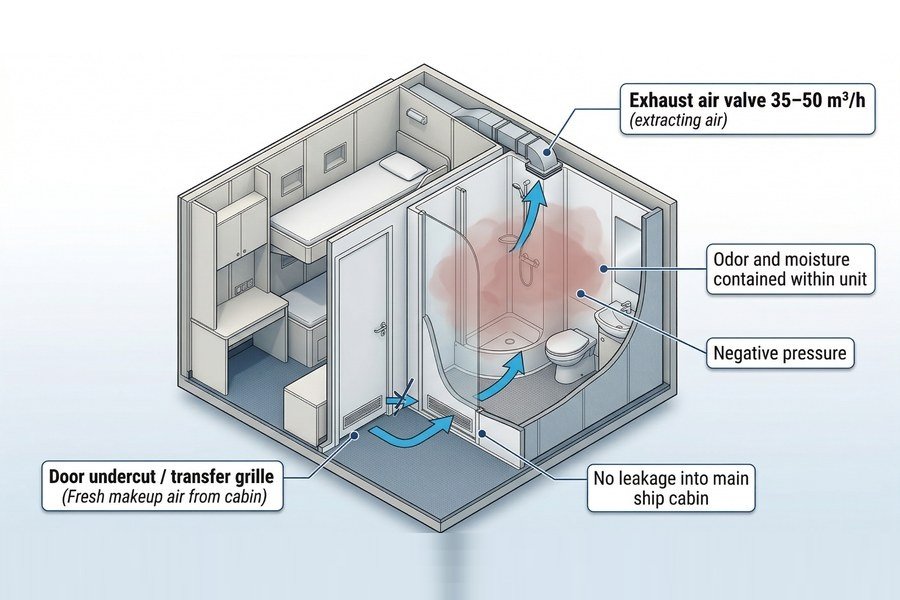
Air flow is very critical in a small ship cabin. If you buy a cheap wet unit with bad ventilation, the mirror will fog up, and the cabin will smell bad. I have seen many buyers ignore the ventilation specs to save a little money. They always regret it later. A good marine wet unit uses a specific two-part ventilation system.
Exhaust Air Extraction in Prefabricated Wet Units
The first part of the system is the exhaust air valve. This valve sits on the ceiling of the wet unit. It connects to the main HVAC duct of the ship. The factory usually provides a 100mm or 125mm spigot connection on top of the unit roof. This makes the connection very easy for your workers. According to the ISO 75472 standard for marine air conditioning and ventilation, a ship bathroom must exhaust between 35 and 50 cubic meters of air per hour (m³/h). The exhaust fan constantly pulls wet air and smells out of the bathroom. It sends this bad air outside the ship. You must ensure your supplier installs an adjustable exhaust valve so the shipyard can balance the air flow.
Makeup Air Supply Through Door Grilles
The second part of the system is the makeup air supply. When the exhaust valve pulls air out, new air must come in. If new air does not come in, the door will get stuck. The new air comes from the main cabin. It enters the bathroom through a transfer grille at the bottom of the bathroom door. Sometimes, we just leave a 15mm gap under the door. This is called a door undercut. Because the exhaust valve pulls air out faster than the grille lets it in, the bathroom has negative pressure. The negative pressure is usually around 10 to 15 Pascals. This negative pressure is very important. It ensures that air only flows from the cabin into the bathroom. Bad smells can never flow from the bathroom into the cabin.
| Ventilation Component | Location | Primary Function | Standard Specification |
|---|---|---|---|
| Exhaust Air Valve | Ceiling of the wet unit | Removes moisture and odors | 35 to 50 m³/h (ISO 7547) |
| Connection Spigot | Top exterior roof | Connects unit to ship HVAC | 100mm or 125mm diameter |
| Transfer Grille / Undercut | Bottom of the bathroom door | Allows fresh air to enter | 15mm gap or louvered grille |
| Overall System Pressure | Inside the wet unit | Keeps odors inside the bathroom | 10 to 15 Pa negative pressure |
What are the advantages of prefabricated wet units over traditional shipboard bathroom construction?
Building a bathroom piece by piece on a ship wastes time and money. It also leads to mistakes. Prefab units solve this headache completely.
Prefabricated wet units offer four major advantages over traditional construction: a 30% reduction in overall installation costs, strictly controlled factory-level waterproofing, a single point of warranty for all fixtures, and simple plug-and-play connections. This eliminates the need for multiple tradesmen working in cramped ship cabins.
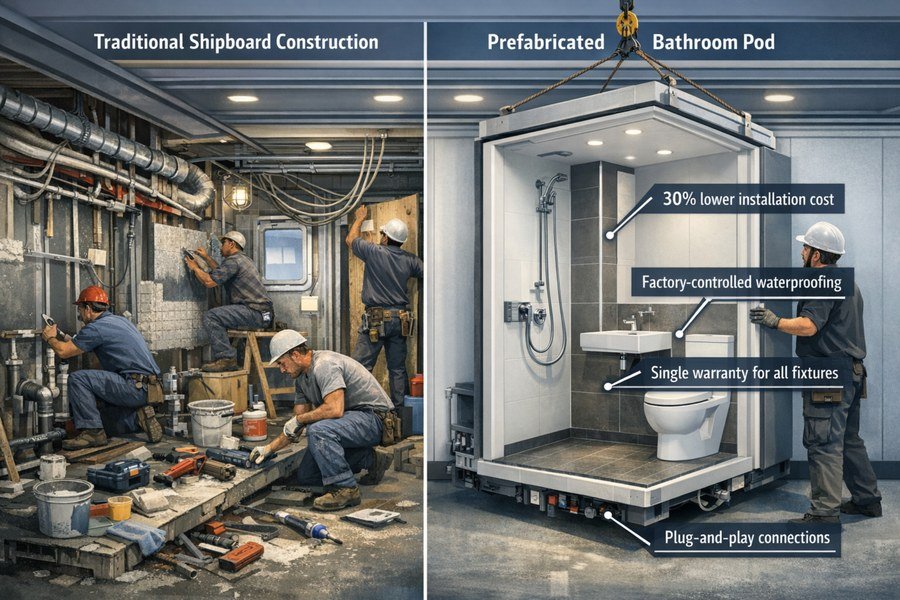
When I first started in the shipbuilding industry, we built bathrooms directly inside the ship cabins. We called this traditional construction. It was a terrible process. Workers bumped into each other, and materials always got lost. Now, almost all commercial ships use prefabricated wet units. There are four clear reasons why you should always choose prefab units for your interior decoration projects.
Cost Reduction and Quality Control in Factory Settings
The first advantage is the 30% reduction in installation costs. When you build a bathroom on a ship in Europe or the US, you pay very high hourly wages. If you buy a prefabricated unit from a good factory in Asia, you pay much lower factory labor rates. A standard prefab unit might cost $2,500 to $4,000, but building the same bathroom on the ship could cost over $6,000 in labor alone. The second advantage is factory-level waterproofing. In a factory, workers weld a solid steel or epoxy bottom pan. They test it with water for 24 hours. It never leaks. If you build it on the ship, the floor moves, the tiles crack, and the water leaks into the cabin below.
Simplifying Warranties and Installation Work
The third advantage is a single point of warranty. A bathroom has a toilet, a shower, lights, a mirror, and a sink. If you buy these parts separately, you have five different suppliers. If something breaks, no one wants to take responsibility. With a prefab unit, the factory gives you one warranty for the whole room. If the light breaks, you call the unit manufacturer. The fourth advantage is plug-and-play connections. A prefab unit arrives completely finished. The door is on, the mirror is clean, and the pipes are ready. Your workers just push the unit into place. They connect one water pipe, one drain pipe, and one electrical cable. The bathroom is ready to use in a few hours.
| Feature | Traditional Shipboard Construction | Prefabricated Wet Units |
|---|---|---|
| Labor Cost | Very high (Shipyard rates) | Low (Factory rates) |
| Waterproofing | High risk of leaks due to ship movement | 100% factory tested bottom pan |
| Warranty | Multiple suppliers, hard to manage | Single supplier for the whole unit |
| Installation | Requires plumbers, electricians, and tilers | Simple plug-and-play connections |
How do prefabricated wet units reduce overall ship construction time?
Shipyard delays cost thousands of dollars a day. Waiting for bathroom tiles to dry is not an option. See how modules speed up the schedule.
Prefabricated wet units slash ship construction time through three key methods: parallel manufacturing while the hull is built, single-lift crane installation directly onto the deck, and simple quick-connect couplings for MEP services. This approach removes bathroom outfitting from the critical path, saving weeks of expensive labor.
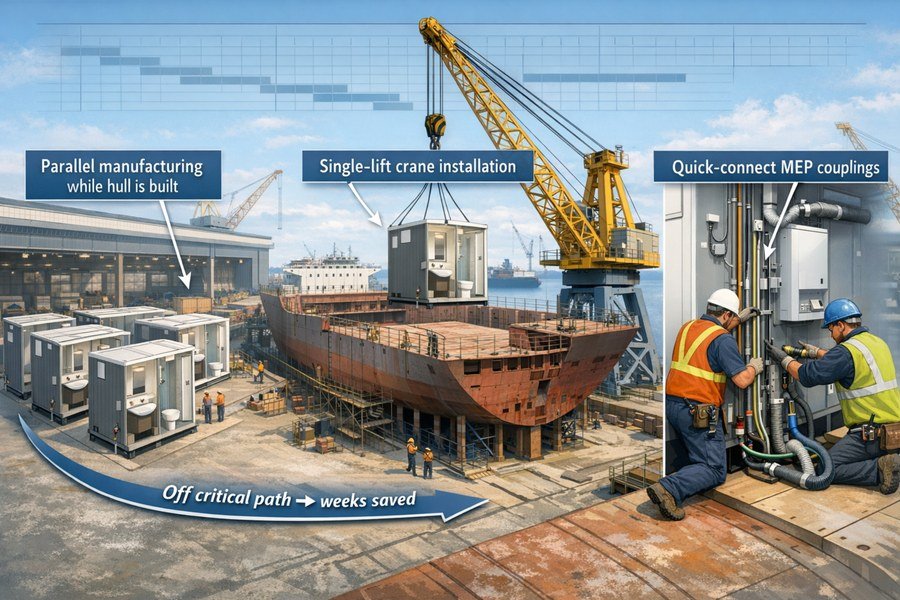
Time is money in the shipbuilding business. If you undertake an interior decoration project for a large shipyard, the shipyard manager will push you every day. They want the job done fast. Prefabricated wet units are the best tool to speed up your schedule. They save time through three specific methods. I have seen projects finish a whole month early just by switching to prefab bathrooms.
Parallel Manufacturing of Wet Units During Hull Construction
The first method is parallel manufacturing. A ship takes a long time to build. The steel workers must weld the hull first. In traditional construction, you cannot start building the bathrooms until the steel hull is completely finished. This adds months to the schedule. With prefabricated units, the factory in Asia starts building the bathrooms at the exact same time the shipyard starts welding the steel. The factory finishes the units and ships them to the yard. When the steel deck is ready, the bathrooms are already waiting on the dock. This parallel work removes the bathroom construction from the critical path of the project schedule. It saves huge amounts of time.
Single-Lift Crane Installation and Quick Connections
The second method is single-lift crane installation. When the ship deck is open, the shipyard uses a large crane. The crane picks up the finished wet unit and lowers it directly onto the deck. One crane lift takes about 15 minutes. You can load 40 wet units onto a ship deck in one single day. The third method is quick-connect couplings. After the walls and ceiling of the cabin are built around the unit, a worker needs to connect the MEP services. MEP stands for Mechanical, Electrical, and Plumbing. Because the factory uses standard quick-connect plugs and valves, one worker can connect the water, power, and ventilation in just two hours. If they built the bathroom by hand, it would take two workers 10 to 14 days.
| Installation Step | Traditional Method Time | Prefabricated Method Time |
|---|---|---|
| Manufacturing | Waits for hull completion | Built in parallel with the hull |
| Loading to Cabin | Moving separate parts by hand (Days) | Single crane lift (15 minutes) |
| MEP Connections | Plumber and electrician work (5 days) | Quick-connect couplings (2 hours) |
| Total Time per Cabin | 10 to 14 days | Less than 1 day |
What weight savings can be achieved using prefabricated wet units on ships?
Heavy ships burn more fuel and carry less cargo. Steel bathrooms add unnecessary tons to your vessel. Let us look at how to cut that weight.
Prefabricated wet units achieve massive weight savings by utilizing three lightweight core materials: aluminum honeycomb panels, GRP (Glass Reinforced Plastic), and thin-profile steel. These materials reduce the unit's weight by up to 50%, bringing a standard bathroom down from 400kg to under 200kg without sacrificing structural integrity.
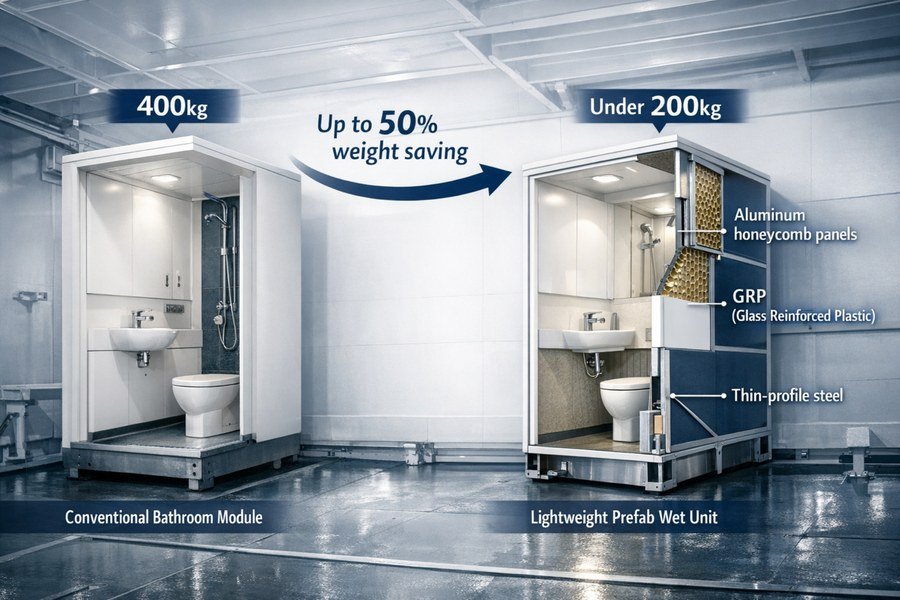
Weight is a very serious topic in marine engineering. Every extra kilogram on a ship means the engine must burn more fuel to push the ship through the water. The International Maritime Organization (IMO) has strict rules about reducing ship emissions. Ship owners always want lighter interior products. Therefore, you must offer lightweight wet units to your European and American shipyard clients. They achieve this low weight by using three special materials.
Aluminum Honeycomb and GRP Material Weight Analysis
The first lightweight material is the aluminum honeycomb panel3. A traditional steel wet unit weighs about 400kg. This is very heavy. If you use aluminum panels with a honeycomb core, the walls become very strong but very light. An aluminum honeycomb wet unit usually weighs about 200kg. This cuts the weight in half. The second material is GRP, which stands for Glass Reinforced Plastic4. GRP is even lighter. A fully molded GRP wet unit can weigh as little as 150kg. I learned this while studying DNV GL approved material lists. GRP is completely waterproof and very easy to clean. Many cruise ships use GRP units because they need thousands of bathrooms, and the weight savings are huge.
The Impact of Lightweight Units on Ship Fuel Consumption
The third material is thin-profile steel. Sometimes a client demands steel for fire safety reasons. In this case, factories use special high-strength steel that is very thin. This keeps the weight around 280kg. Let us look at the real impact of these weight savings. Imagine you are outfitting a cruise ship with 1,000 passenger cabins. If you use 400kg traditional steel units, the total bathroom weight is 400 tons. If you use 200kg aluminum honeycomb units, the total weight is only 200 tons. You just saved the ship owner 200 tons of dead weight. The ship will sit higher in the water, burn less marine diesel oil, and save the owner money every single day.
| Core Material | Average Weight per Unit | Best Application | Key Benefit |
|---|---|---|---|
| Traditional Steel | 400 kg | Cargo ships / Workboats | Very strong, low initial cost |
| Thin-Profile Steel | 280 kg | Commercial vessels | Balances weight and fire safety |
| Aluminum Honeycomb | 200 kg | Ferries / Passenger ships | 50% lighter, very rigid |
| GRP (Glass Reinforced Plastic) | 150 kg | Cruise ships / Yachts | Lightest option, fully molded |
Conclusion
Prefabricated wet units save time, cut weight, and stop leaks. Choose the right dimensions, ventilation, and plumbing to ensure your marine interior project stays on budget and on schedule.
Take the Next Step in Your Outfitting Project
Finding the right dimensions is crucial, but successful integration requires a broader understanding of marine wet units. Explore my related articles to complete your project planning:
Learn the basics and benefits: What Are Prefabricated Wet Units?
Navigate safety and compliance: What IMO Regulations Apply to Prefabricated Wet Units on Commercial Vessels?
Explore custom options for your fleet: How Are Prefabricated Wet Units Customized For Cruise Ships Versus Cargo Vessels?
-
Learn PEX benefits—flexibility, durability and vibration resistance—to decide if they’re the best choice for marine cabin water lines. ↩
-
Consult the authoritative standard summary to confirm required exhaust rates (35–50 m³/h) and compliance steps for ship systems. ↩
-
View manufacturer specs and DNV/ABS approvals to confirm stiffness, weight savings, and suitability for marine sanitary units. ↩
-
Learn GRP's weight, waterproofing, cleaning benefits and industry approvals used on cruise ships to estimate fuel and maintenance savings. ↩